Did you know that 60% of sales leads never get followed up with? Many businesses struggle not because they lack prospects, but because human sales teams can’t respond fast enough, handle large volumes, or consistently engage every lead. This gap directly impacts conversion rates and revenue growth.Enter sales voice agents. AI-powered systems designed to handle sales calls, qualify leads, and even schedule meetings without human fatigue. With AI sales calls, voice sales automation, and conversational sales AI, companies can reach more prospects, maintain consistent communication, and close deals faster.
What Are Sales Voice Agents?
Sales voice agents are intelligent systems that interact with potential customers over the phone. Unlike basic automated dialing systems or IVRs, these agents can understand natural language, respond contextually, and perform actionable tasks.
Key points:
- Initiate and respond to sales conversations without manual dialing
- Answer questions about products or services with clarity
- Qualify leads, book meetings, or trigger follow-ups
- Work alongside human teams to handle routine, high-volume outreach
They bridge the gap between efficiency and personalization, ensuring no lead is left unattended.
Why Are Sales Voice Agents Important for Conversion?
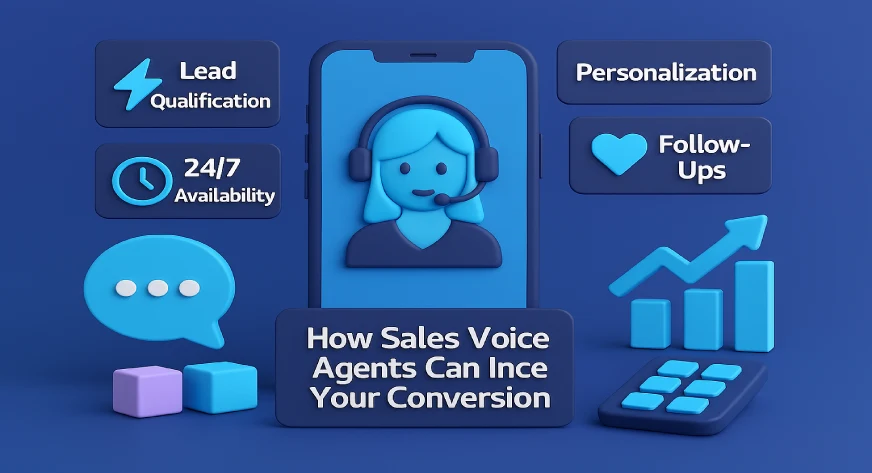
Conversion depends on speed, consistency, and relevance. Sales voice agents make a tangible difference in all these areas:
- Immediate Engagement: Leads often lose interest if not contacted quickly. Sales voice agents initiate calls instantly after a lead expresses interest, which significantly increases the chances of engagement. For instance, companies that respond within five minutes see conversion rates more than double compared to delayed follow-ups.
- Consistent Messaging: Every prospect receives the same accurate and persuasive information. This avoids miscommunication or inconsistent pitches that often happen with large sales teams. Consistent messaging builds trust, making prospects more likely to take action.
- High Volume Handling: Human sales teams can only manage so many calls in a day. Voice agents can handle hundreds of calls simultaneously, ensuring no lead goes unanswered. This scalability ensures that all potential opportunities are addressed promptly.
- Personalized Interaction: Advanced agents can reference CRM data or previous interactions to tailor conversations. For example, a returning prospect can receive suggestions based on prior interests, increasing the likelihood of closing a deal.
- Reliable Follow-Up: Automated callbacks and reminders ensure no lead drops off the radar. Voice agents can schedule follow-ups at optimal times, ensuring consistent contact without relying on manual tracking.
How Sales Voice Agents Work in Conversion and Sales?
Sales voice agents follow a structured workflow designed to maximize efficiency and conversions. Step-by-step, this process looks like:
- Lead Identification: The system retrieves lead data from CRMs, marketing platforms, or signup forms. Leads can be segmented by interest, engagement score, or behavior to prioritize high-value prospects.
- Call Initiation: Agents automatically make outbound calls or respond to inbound queries. The AI determines the optimal time to call based on past interactions and customer time zones, ensuring higher answer rates.
- Natural Conversation Handling: Using conversational sales AI, agents understand intent and answer questions in real-time. Unlike rigid IVR systems, these agents can adapt to pauses, clarifications, and follow-up questions.
- Lead Qualification: The agent asks structured questions to filter high-potential prospects. For example, it can assess budget, urgency, and product fit, passing only qualified leads to human sales representatives for closing.
- Action Execution: Agents can book meetings, schedule demos, provide product information, or send follow-up messages. This ensures that all routine tasks are handled automatically, speeding up the sales cycle.
- Escalation to Human Teams: Complex queries, high-value leads, or objections that require negotiation are seamlessly transferred to human agents. This ensures a balance between automation efficiency and personalized human attention.
- Data Logging & Analysis: Every call is logged, including questions, objections, and outcomes. This data can be analyzed to improve scripts, refine lead scoring, and inform broader sales strategies.
Ways Sales Voice Agents Increase Conversions and Sales
Sales voice agents impact conversions and sales performance in multiple practical ways:
- Faster Lead Response: The sooner a prospect is contacted, the higher the likelihood of conversion. Voice agents initiate calls immediately, significantly reducing the response gap that often causes lost opportunities.
- Consistent Follow-Up: Many leads are lost due to missed or delayed follow-ups. Agents schedule and manage callbacks automatically, ensuring every lead receives attention at the right time.
- Scalable Outreach: Voice agents can handle dozens, hundreds, or even thousands of calls simultaneously. This allows businesses to reach more prospects than would be possible with a human-only team, especially during promotions or product launches.
- Personalized Conversations at Scale: By referencing CRM data, agents deliver conversations tailored to a prospect’s history, interests, and needs. For example, recommending products based on past purchases increases upsell success.
- Lead Prioritization: Agents score leads based on engagement or interest level, allowing human sales teams to focus on high-value prospects while less promising leads are nurtured automatically.
- Upselling and Cross-Selling Opportunities: AI can identify upsell potential during calls, such as suggesting complementary products or services, increasing average deal size.
- Reduced Human Workload: By handling routine inquiries and qualification, agents free human teams to focus on high-touch interactions, which enhances sales efficiency and effectiveness.
Top Use Cases for Sales Voice Agents
Sales voice agents are highly versatile, handling multiple stages of the sales process efficiently. Here’s how businesses are using them to increase conversions and streamline operations:
1. Cold Outreach and Lead Generation
- Voice agents can initiate first contact with new leads from marketing campaigns, sign-ups, or purchased lists.
- They deliver consistent messaging and can ask qualifying questions to gauge interest quickly.
- Example: A software company can contact hundreds of new leads in an hour, identifying prospects who are ready for a demo and passing them to human sales teams.
2. Lead Qualification and Prioritization
- AI agents ask structured questions to determine whether a lead meets criteria like budget, need, or urgency.
- They can score leads based on responses, automatically prioritizing high-potential prospects for human follow-up.
- Example: A B2B company might use the agent to pre-qualify leads for enterprise solutions, ensuring sales reps focus only on serious opportunities.
3. Appointment Scheduling and Follow-Ups
- Agents can book meetings, schedule demos, or confirm appointments in real time.
- Follow-ups are automated for reminders or rescheduling, reducing no-shows.
- Example: A financial services firm uses agents to confirm consultation calls with clients, freeing human staff to prepare for high-value meetings.
4. Upselling and Cross-Selling Opportunities
- During conversations, agents can identify opportunities to offer complementary products or upgrades.
- They suggest relevant options based on purchase history or lead data.
- Example: An e-commerce platform uses AI voice agents to offer extended warranties or accessory bundles to recent buyers during post-purchase calls.
5. Event and Webinar Registration
- Agents handle outreach to potential attendees, explain event details, and confirm registrations.
- They can manage multiple campaigns simultaneously, tracking responses and updating registration lists.
- Example: A SaaS company running a product webinar uses agents to reach 1,000+ leads and ensure smooth registration without overloading the human team.
6. Post-Purchase Engagement and Customer Retention
- Voice agents contact customers after a purchase to gather feedback, provide product support, or offer additional services.
- This proactive approach helps retain customers, improve satisfaction, and encourage repeat purchases.
- Example: A subscription service uses agents to remind customers of renewal dates or offer upgrade options, boosting retention rates.
7. Market Research and Feedback Collection
- AI voice agents can conduct surveys or gather opinions during sales or follow-up calls.
- The data collected helps refine product offerings, pricing strategies, and sales scripts.
- Example: A consumer electronics company uses agents to ask post-purchase questions about product satisfaction, feeding insights into future marketing strategies.
Steps to Implement a Voice AI Agent in Your System
Implementing a sales voice agent requires planning and structured execution. Here’s a detailed roadmap:
- Define Goals: Identify the specific sales processes you want to automate—cold outreach, lead qualification, follow-ups, or appointment scheduling. Clearly outlining goals helps measure success.
- Select the Right AI Platform: Choose a solution that integrates seamlessly with your CRM, email system, and analytics tools. Evaluate capabilities like natural conversation, multi-language support, and reporting features.
- Design Conversation Scripts: Create structured scripts for typical customer interactions, including qualifying questions, common objections, and recommended responses. Make them flexible enough to allow natural conversation flow.
- Pilot the System: Test with a small segment of leads first to measure performance, gather feedback, and adjust responses. Piloting ensures smooth integration and identifies potential issues early.
- Full Integration: Connect the agent with all sales and marketing systems, ensuring data flows correctly between CRM, marketing automation, and analytics tools.
- Monitor Performance Metrics: Track KPIs such as lead engagement, conversion rates, call duration, and follow-up success. Monitoring helps refine scripts and improve overall efficiency.
- Continuous Improvement: Update scripts, retrain AI models, and optimize processes based on performance data. Regular refinement ensures the agent continues to generate value as business needs evolve.
The Future of Sales Voice Agents
The potential for sales voice agents is growing rapidly:
- Advanced Conversational AI: Agents will handle multi-turn, context-rich interactions more naturally
- Predictive AI: Anticipating questions and tailoring offers before a lead asks
- Emotion Detection: Recognizing tone to adjust approach and improve persuasion
- Global Reach: Multilingual capabilities to expand market coverage
- Seamless System Integration: Working across marketing, analytics, and support platforms for end-to-end automation
Sales voice agents are moving from support tools to essential revenue-driving systems, reshaping how businesses engage prospects.
Key Takeaway
Sales voice agents are not limited to just making calls—they actively support lead generation, qualification, engagement, retention, and revenue growth. By automating repetitive tasks while maintaining natural conversations, businesses can handle larger volumes of prospects, improve efficiency, and focus human effort where it matters most.
Shri SitaNath AI builds sales and voice systems designed for ease of use and practical results. The focus is on smooth conversations, reliable automation, and solutions that help teams close more deals efficiently.