AI systems have been part of business software for years, often working quietly behind dashboards, reports, and automation tools. Most of these systems respond only when prompted. A new shift is now taking shape, where AI systems can plan, decide, and act with minimal supervision. This shift is known as agentic AI, and it changes how businesses think about automation and decision-making.
Instead of asking AI to complete one task at a time, companies are beginning to rely on systems that can handle goals, make choices, and manage workflows on their own. Understanding how this differs from traditional AI helps businesses decide where and how to apply it responsibly.
How Traditional AI Has Worked So Far?
Traditional AI is designed to respond to specific instructions. It works within clearly defined boundaries set by developers and users. These systems perform well when tasks are predictable and structured.
For example, a traditional AI model might recommend products, filter spam, or generate text based on a prompt. It waits for input, processes data, and returns an output. Once the task is complete, it stops. This approach has powered many successful tools, but it depends heavily on constant human direction.
Traditional systems are reliable for repeatable tasks, yet they struggle when decisions require planning across multiple steps or adapting to changing conditions.
Why Businesses Are Looking Beyond Task-Based AI?
As operations grow more complex, businesses face challenges that cannot be solved by single-step automation. Marketing campaigns, customer support flows, and operations management involve decisions that depend on context, timing, and outcomes.
Many teams now manage dozens of tools and workflows. Coordinating these manually slows progress and increases errors. This is where agentic AI enters the picture. It offers a way to move from instruction-based systems to goal-driven systems that can operate with broader responsibility.
The demand is not for smarter answers alone, but for systems that can take initiative within defined limits.
What Agentic AI Means in Simple Terms?

Agentic AI refers to AI systems designed to act as agents rather than tools. An agent does not wait for constant prompts. It is given a goal and the ability to decide how to achieve it.
These systems can:
- Break goals into steps
- Choose actions based on outcomes
- Monitor progress
- Adjust their approach when conditions change
This does not mean they operate without oversight. Instead, they work within rules, priorities, and safeguards defined by humans.
Key Differences Between Agentic AI and Traditional AI
The most noticeable difference lies in initiative. Traditional AI responds. Agentic AI acts.
| Aspect | Traditional AI | Agentic AI |
| Basic Role | Designed to respond to a specific input and produce a single output. It performs tasks when asked and then stops. | Designed to act as an ongoing agent that works toward a goal. It continues operating until the objective is achieved or stopped. |
| Level of Initiative | Waits for human prompts or predefined triggers before taking action. | Takes initiative within defined boundaries by deciding what action to take next based on the goal. |
| Task Handling | Handles one task at a time. Each task is separate and needs its own instruction. | Manages a sequence of tasks that are connected and interdependent, treating them as part of one workflow. |
| Decision Making | Follows fixed rules or learned patterns to deliver responses. Decisions are limited to the immediate task. | Makes decisions based on context, progress, and outcomes, adjusting actions as conditions change. |
| Adaptability | Works best in stable and predictable environments with clear rules. | Adapts to changing situations by monitoring results and modifying its approach when needed. |
| Human Involvement | Requires frequent human input to guide each step and restart processes. | Requires human oversight at key checkpoints rather than constant instructions. |
| Memory and Context | Has limited or short-term context, often forgetting previous steps once a task is completed. | Maintains ongoing context and memory to track what has been done and what still needs attention. |
| Workflow Ownership | Executes individual actions within a workflow but does not manage the entire process. | Owns and manages the workflow from start to finish within defined limits. |
| Response to Outcomes | Delivers output but does not assess whether the result was effective. | Reviews outcomes and decides whether to continue, adjust, or escalate actions. |
| Use Case Fit | Suitable for simple, repeatable tasks like classification, recommendations, or single-step generation. | Suitable for complex, multi-step processes such as campaign management, scheduling, or customer interactions. |
| Integration with Tools | Often operates as a standalone feature or plugin within one system. | Connects across multiple systems such as CRMs, scheduling tools, and analytics platforms. |
| Risk and Control | Lower autonomy reduces risk but limits flexibility and efficiency. | Higher autonomy increases efficiency but requires clear boundaries, permissions, and governance. |
| Scalability | Scales task volume but not responsibility or coordination. | Scales both volume and responsibility by managing workflows at higher complexity. |
| Business Value | Improves speed and accuracy for individual tasks. | Improves continuity, coordination, and outcome-focused execution across teams. |
How Agentic AI Systems Are Structured?
Agentic systems rely on multiple components working together. This often includes planning logic, memory, decision models, and integration with external tools.
For example, AI agent systems used in operations may connect with CRMs, scheduling platforms, and analytics tools. The agent tracks what has been done, what still needs attention, and what actions should come next.
This structure allows the system to manage workflows that would otherwise require continuous human coordination.
How Autonomous AI Agents Operate Day to Day?
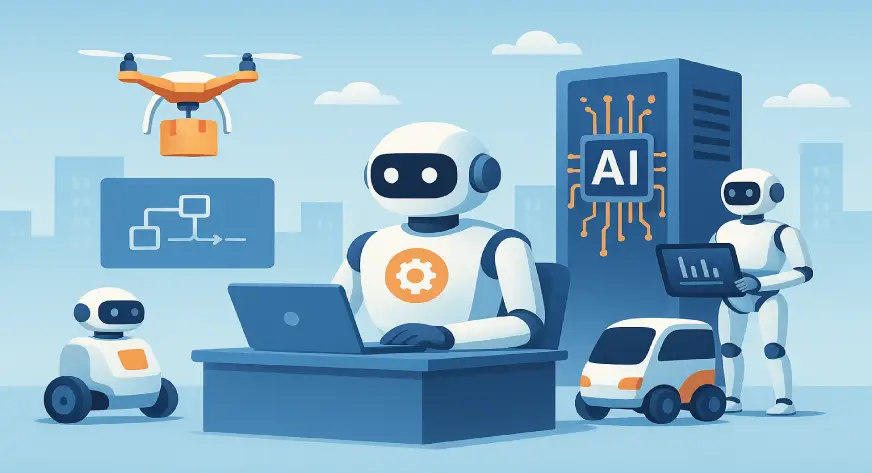
Autonomous AI agents are designed to handle ongoing responsibilities rather than isolated tasks. Once assigned a role, they operate continuously within that scope.
For example, an agent managing appointment scheduling can monitor availability, confirm bookings, send reminders, and handle rescheduling without repeated instructions. It observes patterns and improves responses over time.
This approach reduces handoffs and allows teams to focus on exceptions rather than routine operations.
Intelligent Agents in Business Workflows
Intelligent agents are often used where decisions depend on context rather than fixed rules. Marketing, customer support, and internal operations benefit greatly from this approach.
An intelligent agent managing a campaign can adjust posting schedules based on engagement data, coordinate content updates, and pause actions that perform poorly. Instead of waiting for human review at every step, it flags issues when attention is needed.
This creates a smoother workflow while keeping humans in control of strategy.
Where Agentic AI Is Already Being Used?
Many industries are adopting agent-based systems quietly rather than as headline projects. Customer support teams use voice agents that manage conversations end to end. Operations teams rely on agents to coordinate logistics updates. Marketing teams use agents to manage content pipelines.
In these cases, agentic AI handles coordination rather than creation alone. The value comes from continuity and follow-through.
Why Agentic AI Requires Clear Boundaries?
Because agentic systems act with more independence, boundaries matter. Clear goals, permissions, and escalation rules must be defined from the start.
Without limits, autonomous systems can make decisions that conflict with business priorities. Responsible design ensures agents know when to act, when to pause, and when to involve humans.
This balance protects trust and keeps systems aligned with organizational values.
How Agentic AI Changes Team Roles?
Agentic systems shift human roles from execution to supervision. Teams spend less time triggering tasks and more time reviewing outcomes and refining goals.
This does not reduce accountability. It increases it. Humans remain responsible for defining objectives, reviewing performance, and handling sensitive decisions.
Over time, teams develop a stronger understanding of how systems behave and how to guide them effectively.
Choosing Between Traditional and Agentic AI
Not every problem requires an agentic approach. Simple, one-step tasks work well with traditional AI. Complex, multi-step workflows benefit more from agents.
Businesses should assess:
- Task complexity
- Need for adaptation
- Level of acceptable autonomy
- Integration requirements
Using both approaches together often delivers the best results.
Trust, Security, and Oversight Considerations
Agent-based systems must follow strong security and governance practices. Access controls, logging, and transparency help teams understand how decisions are made.
Organizations adopting AI agent systems should review data handling, escalation paths, and compliance requirements carefully. Trust grows when systems behave predictably and explainably.
The Future Direction of Agentic AI
As tools mature, agentic systems will become easier to configure and safer to deploy. More businesses will use them for coordination rather than experimentation.
The focus will shift toward reliability, explainability, and integration. Agentic AI will feel less like advanced technology and more like dependable infrastructure supporting daily work.
Final Thoughts on Agentic AI
Understanding how agentic AI differs from traditional AI helps businesses make informed decisions. While traditional systems remain valuable, agent-based approaches open the door to smoother workflows and stronger outcomes. When autonomous AI agents, intelligent agents, and AI agent systems are designed with care, they support teams without removing human judgment.
Shri SitaNath AI focuses on building AI systems that remain practical, understandable, and responsibly designed. The emphasis stays on clarity, long-term reliability, and systems that fit naturally into business operations.

You May Also Like