By 2026, businesses are handling more tasks, more channels, and more data than ever before. Teams are expected to move faster without growing endlessly. This is where AI automation workflows make a true difference. Instead of adding pressure on people, automation quietly supports everyday work.
A growing number of companies are using AI content generation as the starting point for automation because content sits at the center of marketing, sales, and communication. When designed well, AI workflows reduce repetition, improve speed, and help teams stay consistent without burning out.
Why Do Most Teams Feel Busy but Still Fall Behind?
According to multiple industry reports, marketing and operations teams spend over 60 percent of their time on repetitive tasks such as writing drafts, updating systems, scheduling posts, and responding to common queries. This work is necessary, but it leaves little room for planning or creative thinking.
AI automation workflows address this gap by handling routine steps automatically. The result is not fewer people, but better use of people’s time. Teams focus on decisions and strategy, while systems handle execution.
What Ai Automation Workflows Look Like in Businesses?
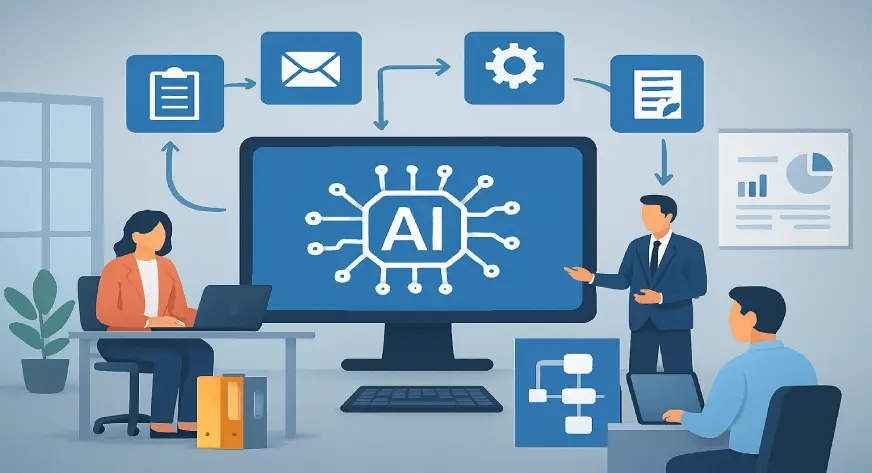
An AI automation workflow is not a single tool. It is a connected sequence where actions trigger the next step automatically.
For example:
- A keyword trend is detected
- Content is generated and reviewed
- Posts are scheduled across platforms
- Engagement data is tracked and summarized
Each step supports the next. Nothing feels disconnected. This is why businesses that adopt structured automation report 30 to 40 percent faster turnaround times across content and operations.
Start Small or Risk Building Something No One Uses
One of the most common mistakes businesses make is trying to automate everything at once. This often leads to confusion and poor adoption.
A better approach is to start with one clear problem:
- Content backlog
- Slow campaign launches
- Delayed customer responses
- Manual reporting
Once a single workflow works smoothly, it becomes easier to expand. Businesses that start small are twice as likely to continue using automation long term.
Picking AI Tools That Fit Your Workflow, Not Fight It
The market is full of generative AI tools, but not all of them work well together. Choosing tools should be based on how easily they fit into existing systems.
Look for tools that:
- Have simple interfaces
- Offer integrations with CRMs or scheduling tools
- Allow human review at key steps
- Scale without major setup changes
For automated content creation, tools should support consistent tone, multiple formats, and easy editing. Complexity may look impressive at first, but it slows teams down over time.
Turning Content Creation Into a Repeatable System
Content is one of the easiest areas to automate because the steps are predictable.
A strong workflow usually includes:
- AI-supported research and topic planning
- Draft creation using AI content generation
- Human review for clarity and accuracy
- Automated publishing and distribution
- Performance tracking and summaries
Businesses using this approach often publish 2 to 3 times more content without increasing team size. The key is keeping humans involved where judgment matters.
Scaling Social Media Without Posting Fatigue
Social media demands consistency, which is hard to maintain manually. This is where AI social media posts become useful.
AI can:
- Repurpose one idea into multiple formats
- Adjust captions for different platforms
- Suggest posting schedules based on engagement
- Respond to common comments automatically
Instead of replacing community managers, automation supports them. Teams stay present without being glued to dashboards all day.
Using AI to Handle Customer Conversations at Any Hour

Customer expectations have changed. Many people expect responses within minutes, even outside business hours.
AI-powered voice and chat systems help by:
- Answering frequent questions
- Booking appointments
- Sharing updates and confirmations
- Passing complex cases to humans
Businesses using AI support workflows report up to 40 percent faster response times and improved customer satisfaction. The most effective systems clearly inform users when AI is involved and keep human support available.
Connecting Data So Information Moves Without Friction
Automation only works when systems share information smoothly.
Strong workflows connect:
- Content tools with analytics
- Support systems with CRMs
- Scheduling tools with communication platforms
For example, when a campaign goes live, analytics can automatically trigger reports, while AI social media posts adjust based on performance. This removes manual follow-ups and keeps teams aligned.
Why Human Oversight Still Matters More Than Ever?
Automation does not remove responsibility. It changes it.
Human teams should:
- Review content before publishing
- Monitor sensitive interactions
- Adjust workflows based on outcomes
Companies that keep humans involved see fewer errors and higher trust internally and externally. AI works best when it supports judgment, not replaces it.
Measuring What Matters Instead of Tracking Everything
Once workflows are active, measurement should focus on outcomes.
Useful indicators include:
- Time saved per task
- Output consistency
- Engagement quality
- Reduction in manual effort
Data should guide refinement, not overwhelm teams. Businesses that review workflows quarterly often see steady improvements without major changes.
Building Workflows That Still Work as You Grow
Scalable automation is designed to handle growth without breaking.
This means choosing systems that:
- Support higher volumes
- Handle multiple languages
- Work across teams and regions
Well-built AI content generation workflows allow businesses to expand output while maintaining clarity and control. Growth feels manageable instead of chaotic.
Closing Thoughts
As businesses grow, the need for reliable systems becomes unavoidable. AI automation workflows provide structure without rigidity. When built with care, AI content generation, automated content creation, and AI social media posts work together to reduce pressure on teams and improve everyday results. The goal is not speed alone, but steady progress with confidence.
Shri SitaNath AI focuses on building AI systems that feel connected, practical, and easy to understand. The emphasis is on workflows that support teams and goals, without unnecessary complexity.